

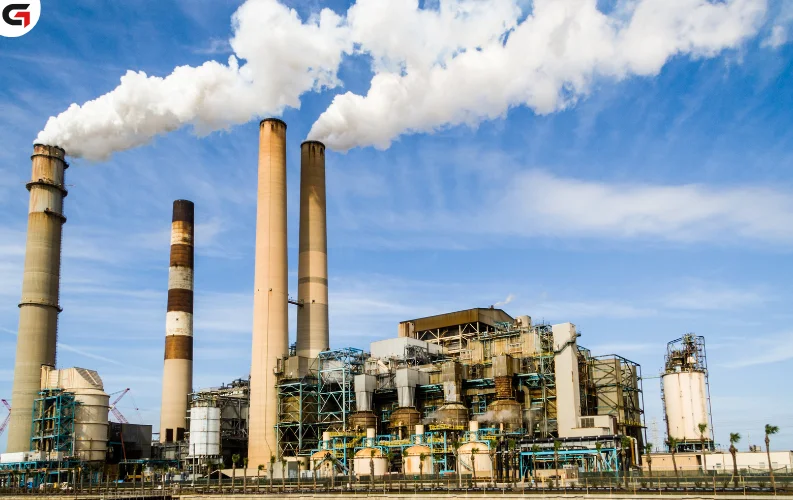
Dubai — The Middle East’s natural gas industry is preparing for one of its most ambitious growth phases yet, with industry leaders estimating that nearly $200 billion in investment will be required over the next four years to keep pace with rapidly rising electricity demand across the region.
The outlook was shared on Wednesday at the first Middle East Gas Conference in Dubai, where more than 150 senior figures from national and international oil companies, policymakers, financiers, and infrastructure executives met to assess the sector’s future and address mounting pressure on regional energy systems.
Hosted by Petroleum Economist in partnership with Crescent Petroleum, the event highlighted how population growth, expanding desalination needs, soaring cooling demand, and the rapid build-out of AI-driven digital infrastructure are collectively reshaping the region’s energy landscape. Experts stressed that gas will remain a crucial backbone for power generation and industrial development in the coming decade.
Majid Jafar, CEO of Crescent Petroleum and Board Managing Director of Dana Gas, said regional production is already rising at an unprecedented pace. “The Middle East is on course to become the world’s second-largest natural gas producer after North America. Since 2020, output has grown by more than 15 per cent, and we expect a further 30 per cent increase by 2030,” he said. Achieving that, he noted, will require substantial investment and a coordinated push to expand capacity.
“This is about more than power supply,” Jafar added. “Gas underpins economic opportunity, strengthens regional integration, and plays a central role in supporting diversified, sustainable growth.”
Meeting Europe-Scale Demand
Conference analysts revealed that the region will need to secure an additional 14 billion cubic feet per day of production by 2030, equivalent to the entire gas demand of Europe’s power sector today. Total output would reach 86 bcfd by the end of the decade if targets are met.
Delegates also noted that the UAE and Saudi Arabia’s aggressive efforts to position themselves as global AI hubs will significantly push electricity demand higher. AI data centers, described as “power-hungry engines of the future economy,” require stable and affordable baseload energy, an area where natural gas continues to offer a competitive advantage.
Representatives from ADNOC, Aramco, Shell, XRG, RAK Gas, Dana Gas, Bapco Energy, and SNOC joined global financial institutions including Deutsche Bank, Cantor Fitzgerald and FAB, reflecting the strong investor interest in the sector’s expansion.
Calls for Cooperation and New Investment Models
Musabbeh Al-Kaabi, CEO of ADNOC Upstream, and Abdulkarim Al-Ghamdi, Executive Vice President for Gas at Saudi Aramco, delivered keynote sessions focused on accelerating infrastructure development and strengthening regional supply chains.
Al-Ghamdi stressed that collaboration between governments, investors, and operators will be key to unlocking future growth. “Gas and its supporting infrastructure are essential for meeting rising demand and driving industrial expansion. Achieving this potential depends on coordinated policy, smart investment, and deeper partnerships across the sector,” he said.
Jassim Alshirawi, Secretary General of the International Energy Forum, echoed these sentiments, noting that natural gas remains central in every global energy forecast. He pointed to Aramco’s ongoing gas expansion programme, which aims to increase sales gas capacity by nearly 80 per cent by 2030, generating an estimated $12–15 billion in additional operating cash flow.
A Sector at a Turning Point
Paul Hickin, editor-in-chief and chief economist at Petroleum Economist, said the conference underscored how pivotal Middle Eastern gas will be for regional prosperity. “Bringing the sector together at this scale shows how vital gas is in supporting stable and sustainable growth for the region’s economies,” he said.
With global demand shifting and regional economies racing toward diversification, the Middle East’s gas strategy is poised to influence global energy markets for years to come. For now, industry leaders agree on one conclusion: meeting the region’s future power needs will require unprecedented investment, and the work must begin immediately.










Comments 0
No comments yet. Be the first to share your thoughts.
Leave a comment
Your email is never published. All fields are required.