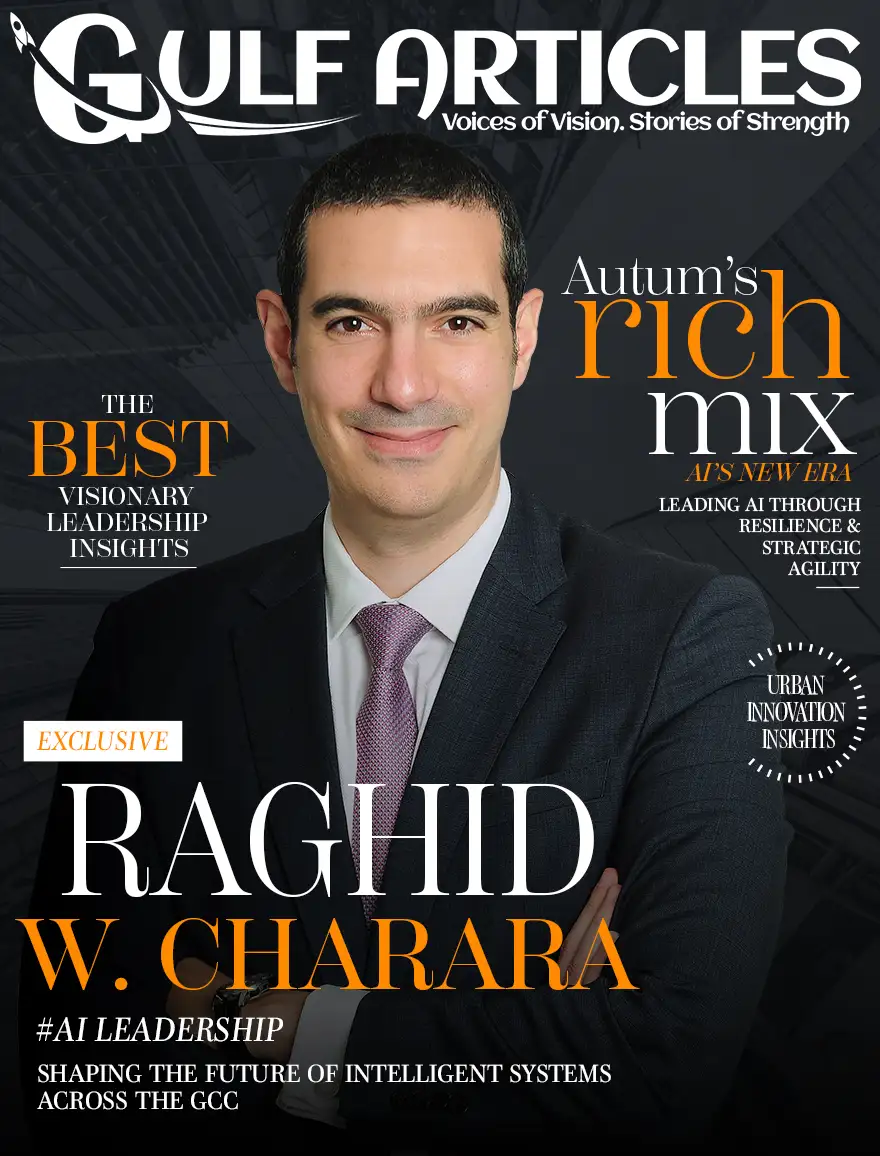

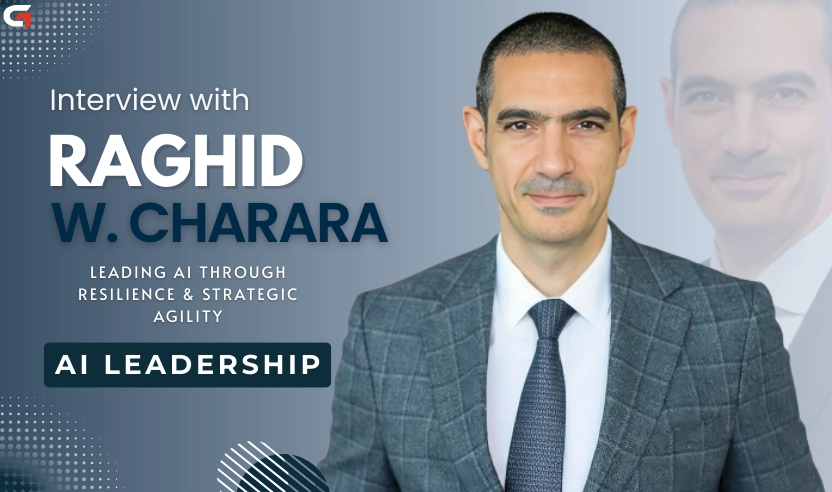
Some leaders navigate technology. Others redefine its purpose in moments when the stakes are highest. Raghid W. Charara belongs to the rare group of AI visionaries shaped not only by expertise but by the ability to lead through complexity, uncertainty, and transformation.
From his early career managing large-scale telecom operations across MEA to stepping into a CIO role during one of Lebanon’s most unstable economic periods, Raghid’s journey has been defined by bold decisions and uncompromising resilience. What began as a shift from infrastructure optimization evolved into a leadership path rooted in strategic agility, data-driven innovation, and a deep commitment to technology’s role in securing business continuity.
Today, as an executive educator and AI leader serving major institutions in the GCC, he stands at the forefront of a rapidly evolving digital landscape, bridging academic insight with real-world impact. His work is reshaping how financial organizations adopt AI, define responsible governance, and prepare for the next wave of intelligent systems.
This feature explores the decisions, achievements, and philosophies that guide his approach to disruption, innovation, and leadership. Readers are invited to follow his journey and discover how strategic foresight, ethical conviction, and a lifelong-learning mindset continue to influence one of the region’s most compelling AI narratives.
A Defining Career Leap
Beyond career milestones, what was the most pivotal decision that shaped your path as an AI leader?
The turning point in my career was not a promotion but the deliberate leap from two decades in telecom operations across MEA straight into a CIO role at a major Lebanese bank during extreme economic volatility in 2018. This move forced a complete transition from optimizing established infrastructure to innovating for resilience and survival through technology under unprecedented pressure. This experience defined my leadership style and taught me that genuine mastery lies in agility, applying strategic thinking and data-driven solutions in a crisis. I learned that technology’s highest purpose is enabling business continuity and foresight, setting the stage for my focus on AI and data leadership.
A Data-First Transformation Vision
What is your core philosophy on digital transformation, and how do you ensure technological innovation delivers business value?
Digital transformation is not a tech project but a continuous strategy of value extraction driven by intelligence, it begins and ends with data. Innovation should be measured by its ROI (Return on Intelligence). In my current role leading AI and Data for a prominent Qatari bank, I ensure that AI advances beyond proofs of concept into high-impact production systems. Our focus is on use cases that redefine business economics, hyper-personalizing customer experiences, automating regulatory compliance, and driving cost efficiencies. My role is to bridge leading-edge academic insights with the operational rigor required by major financial organizations, translating theory into tangible outcomes.
Setting a New AI Benchmark
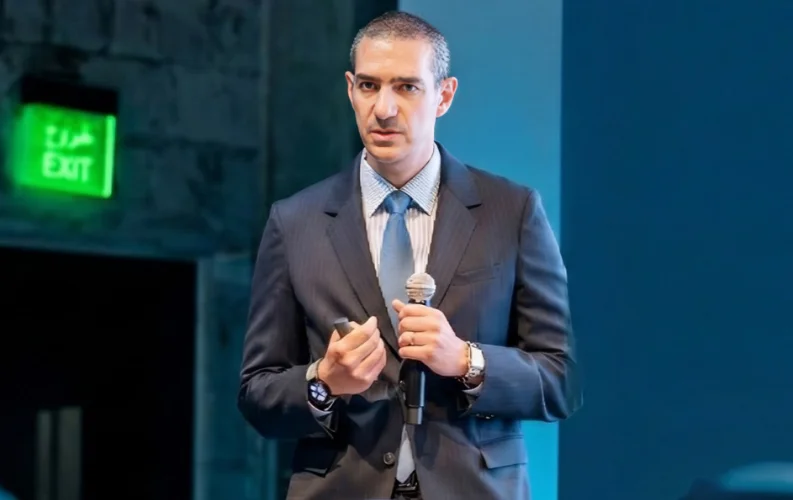
Can you share a recent professional achievement that marked a significant industry-first or paradigm shift in AI use?
My proudest accomplishment was building an AI function from scratch at a major regional bank, now regarded as a benchmark for advanced AI in GCC financial services. This went beyond tool deployment, embedding a data-first operating model into the organization’s DNA. We pioneered large-scale Generative AI applications for internal efficiency and advanced risk modeling, surpassing traditional methods. Coupled with a strong focus on AI ethics and governance, underpinned by my doctoral research, we’ve set a new standard, proving that rapid AI innovation and responsible oversight can and must coexist for trusted, impactful adoption in finance.
Learning Beyond Expertise
Describe a significant strategic failure or challenge, and what non-obvious leadership principle helped you overcome it?
My main recurring challenge is the “overconfidence trap”, assuming past expertise guarantees future success in a rapidly evolving field. To counter this, I embrace my role as “Learner-in-Chief.” Despite extensive executive education, including a dozen INSEAD certifications in leadership, strategy, finance, and innovation, earned at world-leading business schools consistently ranked among the top 10 globally, including INSEAD and IE, I am currently pursuing a Doctorate of Business Administration focusing on AI and Machine Learning. By modeling lifelong learning and academic commitment, I maintain my strategic edge and inspire the organization to value intellectual humility as a driver of adaptability and innovation.
Driving Disruption from Within
In an industry of constant change, how do you cultivate ongoing disruption in your team, and what emerging trend are you focusing on?
I foster proactive disruption by treating my teams as intrapreneurial research labs, providing protected time, demanding transparency about failures, and encouraging cross-disciplinary thinking. This approach, applied at world-leading business schools such as INSEAD and IE, consistently ranked among the top 10 globally, prizes rapid iteration and learning over just end results. The emerging trend I am most preparing for is the convergence of decentralized AI and federated learning with sovereign data requirements. This is vital in the GCC, where secure and sovereign data architectures must allow for collaborative learning without compromising confidentiality.
Lead Through Human Connection
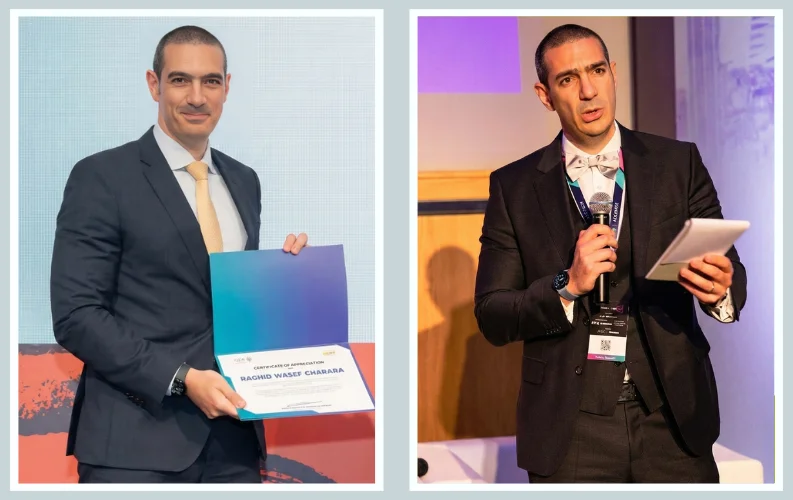
What is the most critical, counter-intuitive advice you’d offer young professionals aspiring to lead in AI?
Don’t chase the perfect algorithm, pursue profound human connection. As AI technology becomes commoditized, a leader’s edge lies in building trust, inspiring collaboration, and articulating an ethical purpose for technology. Master soft power: know when to say no, practice humility, and consistently deliver value through focused execution. Authenticity and aiming beyond the stars differentiate true leaders, because technical brilliance is necessary, but leadership amplifies success.
Conclusion
Raghid W. Charara’s journey demonstrates that leadership in AI is not defined by technical mastery alone but by the courage to evolve, question assumptions, and remain relentlessly committed to learning. His path, from navigating crisis-driven transformation to setting new standards for AI adoption in the GCC, reveals a leader who treats innovation not as an aspiration but as a responsibility.
In an era where technology shifts faster than strategy can often adapt, his approach offers a grounded reminder that sustainable progress requires intellectual humility, ethical rigor, and a deep appreciation for the human dimension of digital change. Whether building advanced AI functions, shaping data-driven operating models, or guiding teams to embrace ongoing disruption, his work reflects a clear and future-oriented vision.
As emerging professionals and experienced leaders alike look toward the next frontier of intelligent systems, Raghid’s insights stand as a valuable blueprint for navigating complexity with purpose. His story encourages readers to reimagine what thoughtful, responsible, and forward-looking AI leadership can achieve, today and in the years ahead.
You may also like:-