
whatsapp

Saudi Arabia to Introduce Sugar-Based Tax on Sweetened Drinks from January 2026

/media/GA_gsLxmRQ._1.webp © Image Copyrights Title

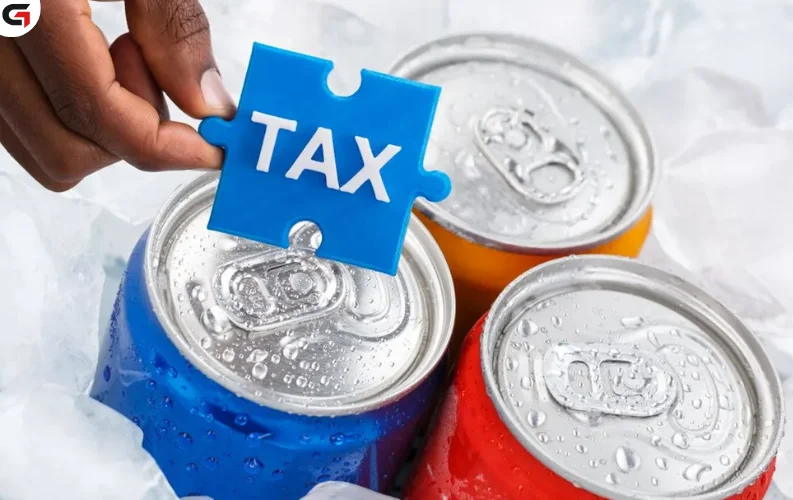
Saudi Arabia will introduce a new tax structure on sweetened beverages beginning January 2026, shifting away from its current flat 50 percent excise tax to a tiered system based on sugar content. The move marks a major step in aligning fiscal policy with public health goals across the Gulf region.

The GCC Financial and Economic Cooperation Committee has approved the revised taxation framework, which calculates levies according to the amount of sugar per 100 millilitres of beverage. The higher the sugar concentration, the greater the tax rate. This approach aims to encourage manufacturers to reduce sugar levels and promote healthier consumption habits among residents.

The existing law applies a uniform 50 percent excise tax on all sweetened beverages, regardless of sugar content. Under the new model, however, beverages with lower sugar levels will be taxed less, incentivizing both producers and consumers to make better health-conscious choices.

The Zakat, Tax and Customs Authority (ZATCA) has published proposed amendments to the Excise Goods Tax Law on the public consultation platform “Istitlaa”, inviting feedback until October 23, 2025. These amendments outline how companies will transition to the volumetric sugar-based model and the technical requirements for compliance.

According to ZATCA, the revised framework covers all products containing added sugars or artificial sweeteners, including ready-to-drink items, concentrates, powders, gels, and syrups that can be converted into beverages. The authority stated that the new system will offer businesses ample time to adapt their production and labelling processes before the rollout.

Workshops and awareness sessions will be conducted with importers, distributors, and manufacturers to ensure clarity and a smooth implementation process. The reform follows a broader GCC initiative to standardize excise taxation across member states, ensuring that sweetened beverage taxes are applied consistently throughout the region.

Once all legislative and regulatory procedures are completed, the new system will officially take effect in Saudi Arabia in early 2026, representing a major step in the Kingdom’s efforts to balance economic reform with public health priorities.


Commnets 0
Leave A Comment

Related Posts
© Global Oil Demand Set for First Annual Decline Since COVID-19, IEA Warns

Global Oil Demand Set for First Annual Decline Since COVID-19, IEA Warns

Global oil demand is expected to record its first annual decline since the COVID-19 pandemic, according to the latest monthly report from the International Energy Agency (IEA). The agency forecasts th...

© Nasdaq Dubai Records $13.8 Billion in New Fixed-Income Listings in 2026

Nasdaq Dubai Records $13.8 Billion in New Fixed-Income Listings in 2026

Nasdaq Dubai has added 33 new fixed-income listings worth $13.8 billion since the start of 2026, reinforcing Dubai's position as one of the world's leading hubs for sukuk and debt capital markets. Int...

© Ajman Bank Raises $300 Million Through Debut AT1 Sukuk Priced at 6.5%

Ajman Bank Raises $300 Million Through Debut AT1 Sukuk Priced at 6.5%

Ajman Bank has successfully completed its inaugural $300 million Additional Tier 1 (AT1) Perpetual Non-Call 5.5-Year Sukuk, pricing the issuance at a 6.5% profit rate. The milestone transaction streng...

© Oil Prices Jump Over 3% as Iran Tensions Stoke Strait of Hormuz Supply Fears

Oil Prices Jump Over 3% as Iran Tensions Stoke Strait of Hormuz Supply Fears

Global oil prices surged more than 3% during early Asian trading on Wednesday after renewed military tensions involving Iran heightened concerns over the security of the Strait of Hormuz, a vital mari...

© OPEC+ Approves August Oil Output Increase as Crude Prices Ease

OPEC+ Approves August Oil Output Increase as Crude Prices Ease

Seven members of the OPEC+ alliance have agreed to increase their combined crude oil production by 188,000 barrels per day (bpd) in August, extending the group's gradual supply expansion as global oil...

© Oil Prices Hold Near $70 as Middle East Risk Premium Eases, Murban Crude Outperforms

Oil Prices Hold Near $70 as Middle East Risk Premium Eases, Murban Crude Outperforms

Global oil prices traded with little movement during Asian trading on Monday as easing geopolitical tensions in the Middle East offset expectations of firm seasonal fuel demand. While benchmark crude ...

© Singapore Seizes $42.5 Million Mansion in Nvidia Chip Smuggling Probe

Singapore Seizes $42.5 Million Mansion in Nvidia Chip Smuggling Probe

Singapore authorities have seized a luxury mansion worth S$55 million (US$42.5 million) as part of an ongoing investigation into an alleged Nvidia AI chip smuggling and money laundering network, offic...

© Bank of Baroda Pays $600 Million to Settle NMC Health Litigation

Bank of Baroda Pays $600 Million to Settle NMC Health Litigation

Bank of Baroda has agreed to pay $600 million to settle litigation related to the collapse of UAE-based healthcare company NMC Health, bringing an end to years of legal proceedings against the Indian ...

© UAE Fuel Prices Drop Sharply in July; Further Relief Possible if Global Oil Prices Stay Lower

UAE Fuel Prices Drop Sharply in July; Further Relief Possible if Global Oil Prices Stay Lower

UAE motorists are enjoying lower fuel prices in July after the country's monthly fuel price revision reflected a sharp decline in international crude oil prices, offering welcome relief following mont...

© Iran Reports 40 Million Barrels of Oil Exports After U.S. Blockade Ends

Iran Reports 40 Million Barrels of Oil Exports After U.S. Blockade Ends

Iran has announced that it exported more than 40 million barrels of crude oil since the United States lifted its naval blockade of Iranian ports earlier this month, marking a significant recovery in t...