

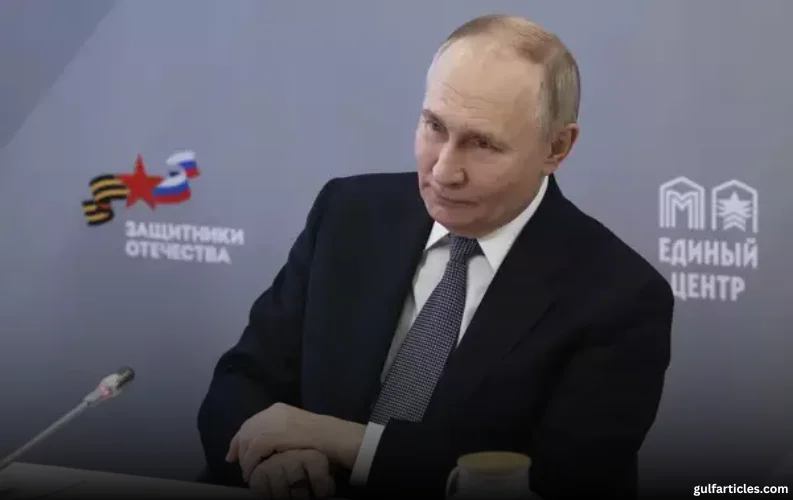
Moscow, Russia – The Kremlin has expressed caution over a proposed 30-day ceasefire agreement between the United States and Ukraine, signaling that it will need further clarification before taking a formal stance. The proposal, brokered by Washington during talks in Saudi Arabia, hinges on Moscow’s acceptance, putting Russia under increased diplomatic pressure.
Russia’s Measured Response
On Wednesday, Kremlin spokesperson Dmitry Peskov said Moscow would not be rushed into making a decision. “You are jumping the gun. We have contacts scheduled with the Americans, and then we’ll see,” Peskov told reporters, indicating that Russia is carefully analyzing the details of the proposal.
He added that U.S. officials, including Secretary of State Marco Rubio and National Security Advisor Mike Waltz, were expected to provide further details in the coming days. Peskov did not rule out a direct phone call between Russian President Vladimir Putin and U.S. President Donald Trump to discuss the ceasefire deal.
Key Details of the Ceasefire Agreement
The agreement, reached in Jeddah on Tuesday, outlines an immediate halt to hostilities for 30 days. As part of the deal, the U.S. will resume military aid and intelligence sharing with Ukraine, which had been paused in recent weeks. Washington has stated that the next move now lies with Russia.
“The ball is now in Russia’s court,” Secretary of State Rubio said following the discussions.
Russia’s Diplomatic Calculations
The ceasefire proposal comes at a time when Moscow has been enjoying relatively warmer ties with Trump’s administration, a shift from the strained relations it faced under former President Joe Biden. However, the renewed U.S. support for Ukraine complicates Russia’s next steps.
Russian Foreign Minister Sergey Lavrov has remained reserved about the proposal, while Foreign Ministry spokesperson Maria Zakharova suggested that Russia will not be pressured into a response. “The establishment of the Russian Federation’s position does not happen abroad due to some agreements or efforts of some parties. The establishment of the position of the Russian Federation happens within the Russian Federation,” she told state media.
Meanwhile, Konstantin Kosachev, head of the international affairs committee in Russia’s parliament, asserted that any agreement would be on Moscow’s terms. “Russia is advancing [in Ukraine], and therefore it will be different with Russia,” he wrote on Telegram.
Putin’s Dilemma
Analysts believe that Putin faces a strategic challenge in responding to the ceasefire deal. Accepting the agreement could be seen as a diplomatic victory for the U.S. and Ukraine, while rejecting it could isolate Russia further and strain its improving ties with Trump’s White House.
“If Putin decides not to support the push for a temporary ceasefire, it will dramatically alter the optics of the war and position Russia as the main obstacle to peace,” Peter Dickinson of the Atlantic Council’s UkraineAlert said in an analysis.
Despite heavy battlefield losses, Russian forces have continued advancing slowly but steadily in Ukraine. However, the shift in U.S. foreign policy—reaffirming its support for Kyiv—complicates Moscow’s long-term strategy.
For now, the Kremlin remains non-committal, watching closely as diplomatic channels remain open for further discussions.












Comments 0
No comments yet. Be the first to share your thoughts.
Leave a comment
Your email is never published. All fields are required.