

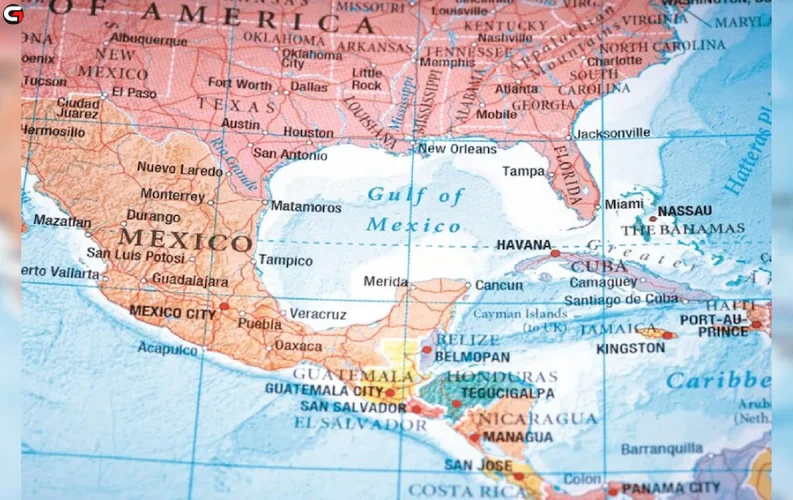
Washington DC: In a move aligned with an executive order by US President Donald Trump, the "Gulf of Mexico" will now appear as the "Gulf of America" on Google Maps for users in the United States. The name change, announced by Alphabet-owned Google on Monday, will follow updates to the federal mapping database as directed by the Trump administration. The executive order, issued on January 20 shortly after President Trump’s inauguration, is part of a series of directives aimed at rebranding certain American landmarks. The US Department of the Interior confirmed that the changes have been made official, and efforts are underway to update America’s Geographic Names System to reflect the revised nomenclature.
Google Maps Adapts to Official Changes
Google explained in a statement on X (formerly Twitter) that the platform adheres to a longstanding policy of updating names once they are modified in official government sources. As a result, US-based users will see the body of water labeled as the "Gulf of America." However, in Mexico, it will continue to appear as the "Gulf of Mexico," while users in other countries will see both names displayed.
Trump’s Renaming Initiatives
The renaming of the Gulf of Mexico is part of President Trump’s broader initiative to restore historically significant names or align place names with his administration’s vision. Among the changes is the reversion of Denali, the tallest peak in North America, back to its earlier name, Mount McKinley. The mountain had been named after President William McKinley in 1917, but was changed to Denali in 2015 during the Obama administration.
President Trump justified the executive order as fulfilling a campaign promise, emphasizing his commitment to honoring America’s heritage and identity.
International Reactions and Controversies
The move has sparked reactions globally, with Mexican President Claudia Sheinbaum humorously suggesting that North America could be renamed “Mexican America,” referencing historical maps of the region. However, no formal diplomatic protest has been filed by Mexico regarding the renaming of the Gulf.
Google’s renaming practice is not without precedent. In regions where naming disputes exist, Google Maps employs locale-based labeling conventions. For example, the water body between Japan and South Korea is displayed as the "Sea of Japan (East Sea)" in international versions, reflecting the ongoing disagreement between the two nations. Similarly, the waterway between Iran and the Arabian Peninsula is labeled as the "Persian Gulf (Arabian Gulf)" in different countries, following years of contention over its name.
What Comes Next?
The renaming initiative is expected to spark debate about the implications of such changes, particularly regarding international relations and historical accuracy. For now, however, US-based Google Maps users can expect to see the updated name, "Gulf of America," in line with the Trump administration’s directive.










Comments 0
No comments yet. Be the first to share your thoughts.
Leave a comment
Your email is never published. All fields are required.