

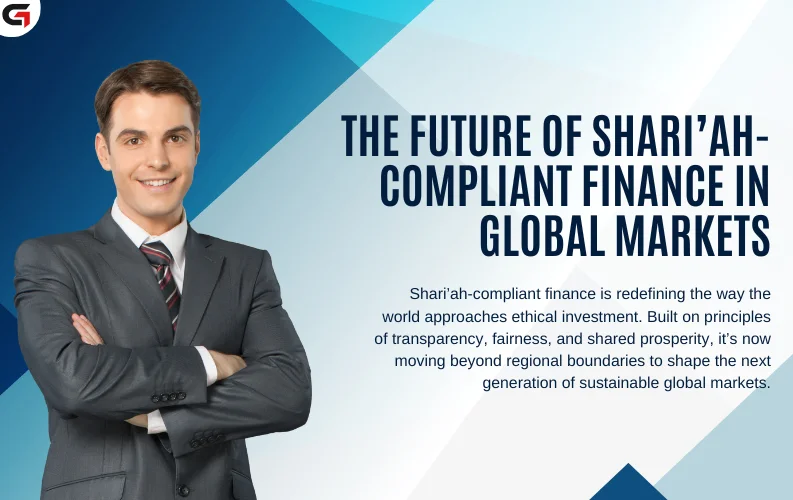
Shari’ah-compliant finance, grounded in the principles of risk-sharing, asset-backing, avoidance of riba (interest), and excessive uncertainty (gharar), has moved far beyond its early niche. What began as an alternative for Muslim-majority markets now appeals to a wider global audience seeking ethical, transparent, and resilient financial solutions.
As cross-border trade deepens, sustainability pressures intensify, and digital rails knit markets together in real time, the next decade will test and advance Islamic finance on three fronts: scale, standardization, and seamlessness.
This outlook unpacks where Shari’ah-compliant finance is headed, what will power its growth, the bottlenecks that remain, and how banks, investors, regulators, and fintechs can position for long-term relevance.
Foundations in Brief: What Sets Islamic Finance Apart
The foundations of Islamic finance are rooted in principles that shape product design and conduct. Transactions must avoid interest (riba) and excessive speculation (gharar), while ensuring risk-sharing and strong links to real assets. Moreover, ethical screens exclude industries such as gambling, alcohol, or adult entertainment.
These principles create a finance model that leans toward transparency, fairness, and discipline. They also resonate strongly with mainstream trends in responsible investing and ESG.
The Growth Thesis: Why Demand Will Expand
Several enduring drivers will continue to expand the reach of Shari’ah-compliant finance.
Key growth forces include:
-
Demographics & Wealth Formation: Young, digitally native populations in the GCC, South and Southeast Asia, and Africa are entering their peak earning years, with demand for values-aligned finance.
-
Ethical Finance Convergence: ESG and impact investing increasingly overlap with Islamic principles of stewardship, justice, and fairness.
-
Trade Corridors & Capital Mobility: The Gulf–Asia–Africa trade triangle, alongside renewed sukuk interest in the UK and Europe, is widening distribution channels.
-
Digital Distribution: Mobile-first onboarding, e-KYC, APIs, and embedded finance reduce acquisition costs and improve compliance.
-
Policy Backing & Market Infrastructure: Regulators are supporting sukuk, Islamic windows, and liquidity tools with stronger standards than ever.
Related Article:- What Are the 7 Best Business Ideas in the Year 2025?
Product Frontiers: What Will Define the Next Wave
The next phase of development will span capital markets, retail finance, takaful, and digital assets.
Capital Markets: Deeper and Greener
Corporate sukuk will complement sovereign issuance, while green and transition sukuk will fund renewable energy, water, and waste projects. Structures such as istisna’ and ijara will support large-scale infrastructure and utility projects.
Retail & SME Finance: Expanding Reach
Co-ownership models like diminishing musharakah will continue to replace mortgages, while murabaha will strengthen SME cash cycles. New Shari’ah-compliant BNPL models, coupled with ETFs and advisory portfolios, will broaden wealth options.
Takaful & Retakaful: Building Resilience
Takaful products will increasingly target micro-insurance for gig workers, farmers, and small businesses. On the corporate side, risk pools for marine, aviation, and cyber will mature as data improves.
Digital Assets & New Rails
Fractionalized tokenized real assets, programmable smart contracts, and modernized cross-border payment systems will provide new opportunities, while preserving compliance safeguards.
Regional Outlook: Where Momentum Is Building
Momentum varies by region but shows broad promise.
In the GCC, sovereign wealth, supportive regulation, and digital-first adoption position the region as a powerhouse for sukuk and wealth management. Southeast Asia continues to lead with Malaysia’s standards and Indonesia’s scale, pushing innovation in green sukuk and fintech. South Asia has latent demand in Pakistan and Bangladesh, where success will depend on digital rails.
Europe and the UK remain relevant through London’s sukuk hub, while continental Europe explores compliant funds aligned with energy transition. Africa, particularly Morocco and Nigeria, is seeing traction in sovereign sukuk and inclusion-driven products. Central Asia benefits from trade-linked demand, and in North America, niche but growing demand exists for real estate funds, home finance, and advisory portfolios.
The Standardization Challenge
For Islamic finance to scale, predictability and trust are crucial.
-
Contract Templates: Broader adoption of murabaha, ijara, mudarabah, and musharakah standards is essential.
-
Governance: Shari’ah boards must remain independent with transparent documentation of rulings.
-
Liquidity Tools: Access to repo-like mechanisms and high-quality liquid assets will strengthen resilience.
Where Frictions Persist, and How to Solve Them
Despite progress, several challenges still slow momentum.
-
Legal enforceability varies across jurisdictions, complicating cross-border deals.
-
Data gaps limit pricing accuracy for newer products such as BNPL and micro-takaful.
-
Talent shortages persist, with few professionals trained in both modern finance and Shari’ah law.
-
Public perception issues remain, with some viewing Islamic finance as either too restrictive or too lenient.
-
Operational complexity adds extra steps compared to conventional finance.
Solutions include: harmonized agreements, regulatory sandboxes, cross-disciplinary training, transparent disclosures, and digitized contract processes.
Sustainability & Impact: Natural Allies
Islamic finance is well aligned with sustainability goals because of its emphasis on asset-backing and avoidance of harmful industries. Future opportunities include outcome-linked structures that adjust profit rates when environmental or social targets are met, revitalized waqf endowments for education and healthcare, and pre-financing models for agriculture and water security.
Explore More:- Boost Your Investment Strategy with ChatGPT: Top 5 AI Tips That Actually Work
Digital Transformation: Compliance by Design
Digital tools will make compliance seamless. Core systems can embed Shari’ah logic at origination, while real-time audit trails ensure transparency. Biometric onboarding will improve inclusion, and smart contracts will encode compliance rules directly, preventing misuse.
Roadmaps for the Key Players
Banks: Strengthen Shari’ah governance, expand high-demand products, invest in liquidity tools, and digitize end-to-end processes.
Asset Managers: Offer broader Shari’ah-screened portfolios, disclose purification methods, and focus on goals-based advice.
Takaful Operators: Target micro-coverage, use IoT and data tools for pricing, and maintain transparency in surplus distribution.
Regulators: Harmonize standards, enable innovation sandboxes, and ensure tax neutrality for sukuk.
Fintechs: Co-create products with scholars, solve everyday frictions such as remittances and salary advances, and build API-ready, compliant infrastructure.
What Success Looks Like by the End of the Decade
By the close of this decade, three signals will indicate that Islamic finance has fully mainstreamed:
-
Parity in experience – opening an account or financing a home is as seamless as conventional banking.
-
Depth in capital markets – frequent corporate and municipal sukuk issuance with active secondary trading.
-
Impact at scale – measurable contributions to housing, SMEs, infrastructure, food security, and climate resilience.
Practical Checklist: Preparing Now
-
Institutions: Review portfolios, form partnerships, improve reporting, and upskill teams.
-
Investors & Families: Clarify goals, verify compliance screens, and diversify portfolios.
-
Policymakers: Codify enforceability, maintain tax neutrality, and build talent pipelines.
Conclusion: Principles Built for a Changing World
Global finance is evolving under the forces of sustainability, digital innovation, and shifting demographics. Shari’ah-compliant finance, anchored in real assets, fairness, and transparency, offers a credible model for resilience.
Its future will be defined not by marketing but by execution: harmonized standards, strong governance, digital integration, and measurable real-world impact. Institutions that embrace these pillars will prove that Islamic finance is not just an “alternative,” but a robust structure for the future of global markets.
You may also like:-