
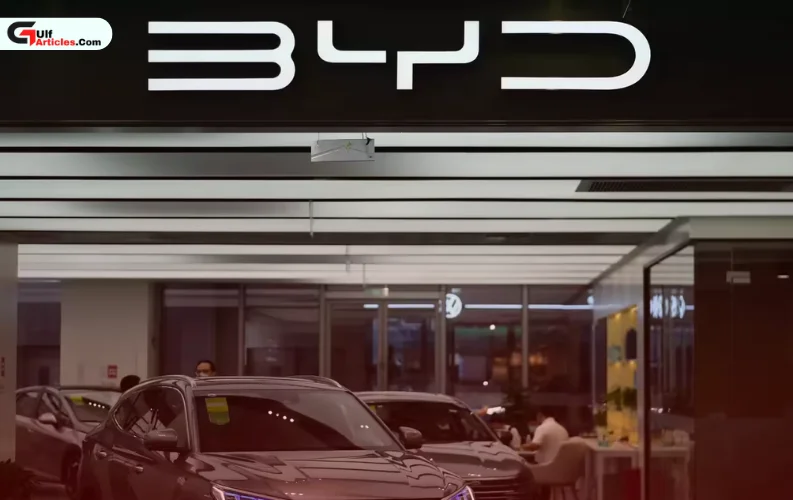
Karachi - China’s leading electric vehicle manufacturer BYD is preparing to begin local vehicle assembly in Pakistan in the second half of 2026, a move expected to intensify competition for established Japanese brands that have long dominated the market.
The new assembly facility is being developed near Karachi in partnership with Mega Motor Company, a subsidiary of Hub Power Company. According to company officials, the plant is scheduled to become operational between the third and fourth quarters of 2026.
Once fully operational, the facility is projected to have an annual production capacity of 25,000 vehicles. The investment in the plant is estimated at around $150 million, with locally assembled models expected to reach customers before the end of 2026.
BYD entered Pakistan in 2024 through imported electric vehicles and has since expanded its dealership network. While official sales figures have not been disclosed, local estimates suggest the company sold approximately 2,000 units in 2025.
The Karachi-area site places BYD in close proximity to long-established production clusters led by Japanese automakers such as Toyota, Suzuki and Honda. These brands have historically controlled Pakistan’s small car and sedan segments.
However, Chinese manufacturers have gained ground in recent years, particularly in sport utility vehicles, hybrid models and electric vehicles. Industry observers note that competitive pricing and government-backed incentives have supported their rapid expansion.
Under Pakistan’s Auto Industry Development and Export Policy 2021–2026, new entrants benefit from reduced import duties on parts and other fiscal concessions aimed at encouraging local assembly. Industry representatives say these measures have allowed Chinese automakers to capture roughly 20% of the passenger vehicle market.
Pakistan has also set a target for electric vehicles to account for 30% of total car sales, imports and production within five years. The government has introduced measures including reduced duties on EV components and lower electricity tariffs for charging infrastructure to support this transition.
Industry executives say environmental and economic factors are further driving demand for cleaner mobility solutions. Rising urban air pollution and a growing fuel import bill have strengthened the case for alternative energy vehicles.
As BYD moves toward local production, analysts expect established manufacturers to reassess pricing strategies, product offerings and electrification plans to maintain market share in an increasingly competitive landscape.