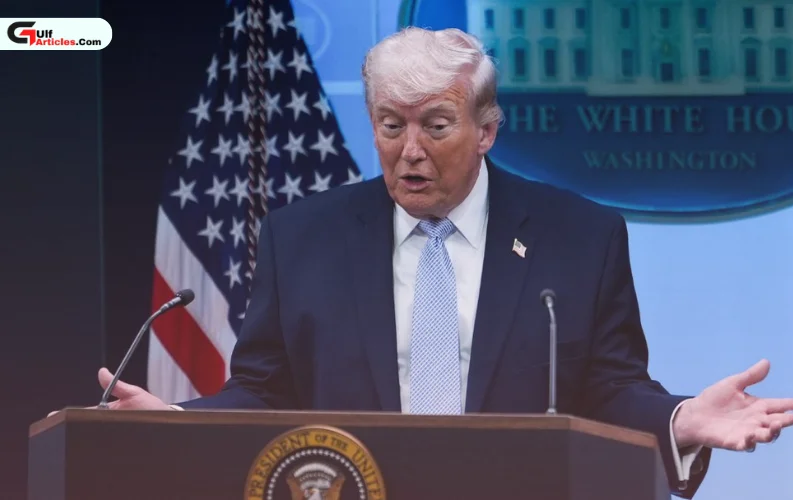

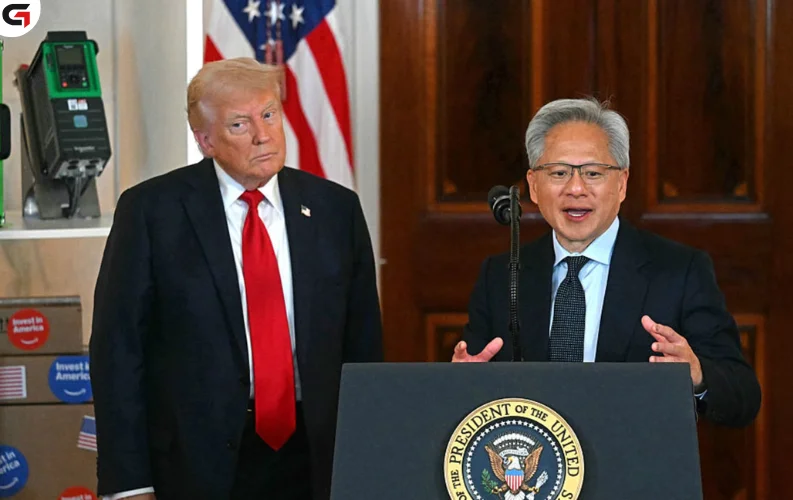
Washington — President Donald Trump said Monday that Nvidia will be permitted to ship its H200 artificial intelligence chips to “approved customers” in China and other markets, provided that 25 per cent of the revenue from those sales is paid to the U.S. government.
Trump detailed the proposed arrangement in a Truth Social post, adding that Chinese President Xi Jinping “responded positively” to the plan during recent discussions. The Department of Commerce is currently finalising the framework, which the president said would also apply to AMD, Intel and other U.S. chipmakers.
The announcement marks a notable shift in U.S. export controls on advanced semiconductors, following months of tightened restrictions aimed at limiting China’s access to high-performance AI hardware. Nvidia’s H200 chip, a higher-grade model than the China-specific H20, remains below the company’s most advanced offerings but is widely sought after for AI development.
Earlier this year, Nvidia and AMD had agreed to remit 15 per cent of revenue from China-bound chip sales to the U.S. government, though Beijing had reportedly advised firms against purchasing Nvidia’s H20 model. The updated proposal signals a broader policy recalibration as Washington and Beijing attempt to stabilise trade tensions.
Nvidia’s shares rose during Monday trading after reports that the Commerce Department was preparing to approve H200 shipments, before paring some of those gains. The stock climbed again in after-hours trading.
In a statement to CNBC, a Nvidia spokesperson welcomed the decision, saying it “strikes a thoughtful balance that is great for America” and supports U.S. manufacturing and high-skilled jobs. Semiconductors remain central to the escalating technological competition between the United States and China, as both nations vie for leadership in artificial intelligence and advanced computing.
The announcement comes against the backdrop of a broader trade reprieve. Following an October meeting in South Korea, Trump and Xi reached a tentative understanding under which China agreed to halt “retaliation” against U.S. chipmakers. Trump said he also raised the issue of Nvidia’s chip exports during that meeting.
As the Commerce Department finalises the new rules, chipmakers and investors are watching for clarity on the approval process, eligible customers in China, and how the 25 per cent revenue model will be enforced across the sector.