

The growing economic influence of the Global South is reshaping global capital flows, positioning the UAE as a major destination for long-term investment, according to Andrzej Dabrowski, Vice President for the Middle East and North Africa at Philip Morris International.
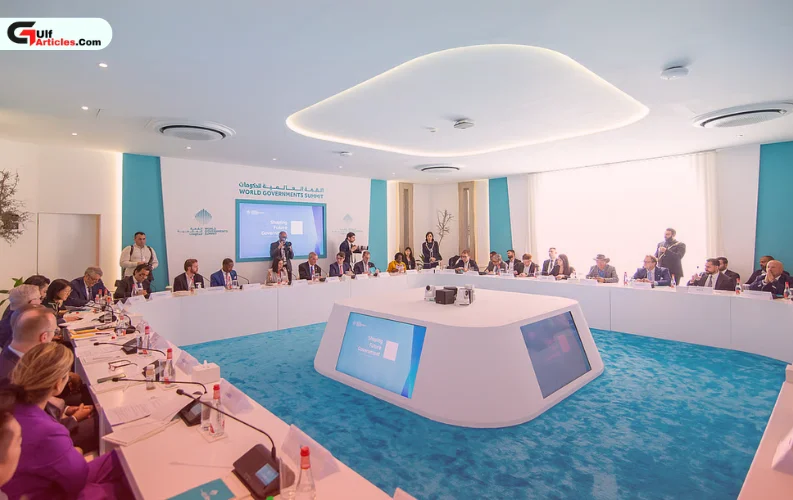
Speaking during the Future of Investments Roundtable at the World Government Summit in Dubai, Dabrowski said shifts driven by technology, sustainability priorities, and emerging-market growth are redefining how and where capital is deployed.
“What we’re witnessing is a rebalancing of global economic gravity toward the Global South,” Dabrowski said. “In that environment, the UAE has positioned itself not only as a recipient of capital, but as a place where investment is scaled, structured, and put to work.”
He pointed to the country’s long-term economic planning, particularly the We the UAE 2031 vision, as a key factor attracting investors seeking stability, innovation, and future-ready industries.
Technology central to business transformation
Dabrowski said the UAE’s regulatory clarity and business ecosystem align closely with PMI’s ongoing transformation into a science- and technology-led company. Dubai, he noted, continues to serve as a strategic base for the company’s operations across the Middle East, Africa, and other emerging markets.
At PMI, more than 99 percent of research and development spending is now directed toward smoke-free alternatives. Data-driven systems play a central role in improving product quality, streamlining supply chains, and strengthening responsible engagement with adult consumers.
“Digital transformation allows us to be more agile and transparent, while supporting adult smokers who choose better alternatives,” he said.
Sustainability and returns increasingly aligned
According to Dabrowski, sustainability in the UAE is no longer viewed as a cost, but as a driver of long-term value. Businesses increasingly see environmental responsibility and profitability as complementary goals.
Beyond product innovation, PMI is working to improve supply chain efficiency, advance circularity, and strengthen transparency standards, including youth access prevention and responsible marketing practices.
Global South shaping investment and public health
Dabrowski highlighted the Global South’s growing role in shaping both investment priorities and public health outcomes. With more than 80 percent of the world’s smokers living in developing regions, he said these markets present both a responsibility and an opportunity for science-based harm reduction.
For PMI in the GCC, this involves aligning investments with national development agendas, working with governments on clear regulatory frameworks, and supporting skills development and digital growth.
“The future of innovation, including public health solutions, will increasingly be shaped in this region,” Dabrowski said. “We intend to be a constructive partner in that process.”