
Skip to content

Discover a different perspective

News

Ford Suspends 2025 Forecast Citing $2.5 Billion Tariff Hit

Ford Suspends 2025 Forecast Citing $2.5 Billion Tariff Hit
Share this article
Text size 14px
Comment

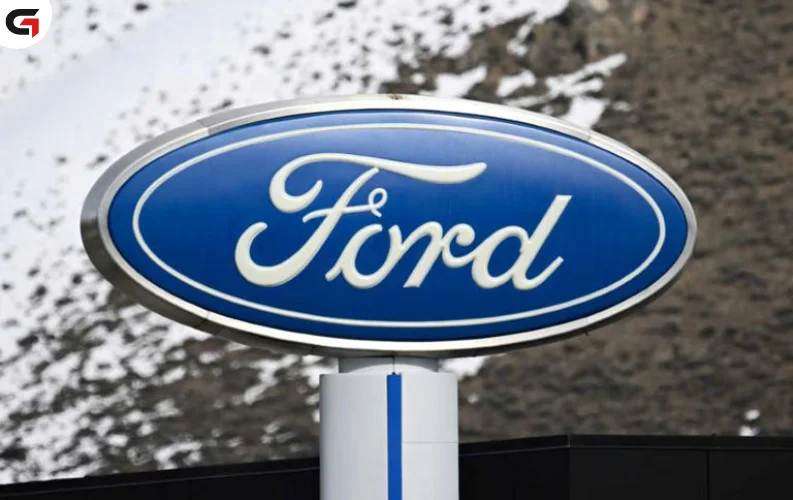
Ford Motor Co. has suspended its 2025 financial guidance after projecting a $2.5 billion impact from new U.S. tariffs, despite posting stronger-than-expected Q1 results.

The automaker said it expects to offset $1 billion of the tariff costs through internal measures, bringing the net impact to $1.5 billion this year. The company cited rising trade tensions, potential supply chain disruptions, and the threat of retaliatory tariffs as key risks.

“Our first-quarter results show that the Ford+ plan is working,” said CFO Sherry House. “We remain focused on building a more durable, high-margin business.”

Ford reported Q1 revenue of $40.7 billion, down 5% year-over-year, and net income of $471 million, compared to $1.33 billion in Q1 2024. Adjusted EBIT fell to $1.02 billion from $2.76 billion a year earlier.

Among business units:

  • Ford Blue posted a 90% drop in EBIT to $96 million.

  • Ford Pro saw revenue decline 16% to $15.2 billion.

  • Model e EV losses narrowed to $849 million from $1.33 billion.

Ford also cut its U.S. industry sales forecast to 15.5 million units, down by 500,000 vehicles, due to tariff effects. The levies — 25% on imported vehicles and parts non-compliant with the USMCA — began in April under President Donald Trump.

By comparison, General Motors expects a $4–$5 billion tariff impact this year, having also revised its 2025 outlook.

Ford said adjustments like halting U.S. exports to China and modifying import logistics helped reduce its Q1 tariff burden by 35%.

The company had initially guided 2025 EBIT of $7–$8.5 billion, with $3.5–$4.5 billion in free cash flow. It will revisit that guidance in its Q2 report.

Comments 0

No comments yet. Be the first to share your thoughts.

Leave a comment

Your email is never published. All fields are required.

Related Stories

Continue reading from Gulf Articles

Lisa Su Named CEO of the Year as Nvidia Leadership Shake-Up Puts AMD in Spotlight

Lisa Su Named CEO of the Year as Nvidia Leadership Shake-Up Puts AMD in Spotlight

AMD CEO Lisa Su has been named Yahoo Finance's 2026 CEO of the Year following a strong year for the semiconductor company, marked by rising share prices, major artificial intelligence (AI) partnerships and expanding data-centre operations. The recognition comes at a significant moment for the chip industry, as Nvidia faces an unexpected leadership transition following Jensen Huang's resignation.

Sokin Secures DFSA Licence, Plans to Expand UAE Workforce to 100 Employees

Sokin Secures DFSA Licence, Plans to Expand UAE Workforce to 100 Employees

Global financial technology company Sokin has secured a licence from the Dubai Financial Services Authority (DFSA), marking a significant step in its expansion across the Middle East. The London-founded fintech has also opened a new office at One Za’abeel in Dubai and plans to increase its UAE workforce to 100 employees over the next 12 months.

Abu Dhabi Advances as Global Maritime Hub, Enters Top 15 Worldwide

Abu Dhabi Advances as Global Maritime Hub, Enters Top 15 Worldwide

Abu Dhabi has entered the world's top 15 leading maritime cities for the first time, securing 15th place in the 2026 Leading Maritime Cities (LMC) Report published by DNV and Menon Economics. The emirate climbed seven positions from its 22nd-place ranking in 2024, reflecting the expansion of its maritime infrastructure, business environment and international competitiveness.

NBQ Ranks Among World’s Top Performing Banks in 2026 by Forbes

NBQ Ranks Among World’s Top Performing Banks in 2026 by Forbes

National Bank of Umm Al Qaiwain (NBQ) has secured fifth place globally in the small banks category of Forbes’ World’s Top Performing Banks 2026 ranking. The recognition places the UAE-based lender among the leading financial institutions in its asset category, highlighting its financial performance and balance-sheet resilience.