


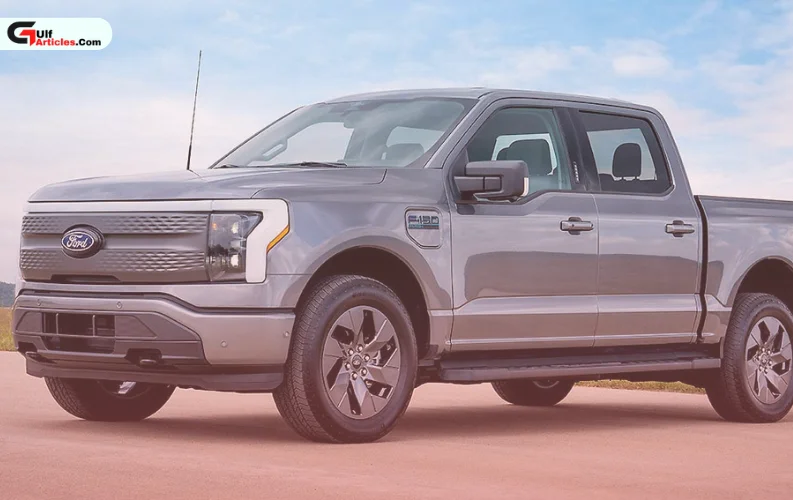
Detroit - Ford Motor Company said its next generation of all-electric vehicles will adopt a 48-volt electrical architecture, a system first commercialized in the United States by Tesla with its Cybertruck.
The move forms part of Ford’s $5 billion investment in a new “Universal Electric Vehicle” (UEV) platform, which will underpin a planned $30,000 small electric pickup truck scheduled for launch in 2027.
Ford executives said the 48-volt system is expected to improve efficiency, reduce weight and lower production costs, key factors in narrowing the price gap between electric vehicles and traditional gasoline-powered models.
Replacing the Traditional 12-Volt System
For decades, the automotive industry has relied on a 12-volt system powered by a lead-acid battery to operate accessories and electronics. However, the increasing electrical demands of modern EVs have strained the conventional setup, contributing to technical challenges and recalls across the industry.
Under the 48-volt architecture, the vehicle’s high-voltage battery powers onboard systems, with the ability to step down voltage to 12 volts when needed through advanced electronic control units.
Alan Clarke, Ford’s executive director of advanced EV development and a former Tesla executive, described the shift as forward-looking.
“It’s less expensive, has smaller wires and is the future of automotive,” Clarke said during a media briefing. He added that the platform is designed to remain viable for more than a decade as electrical bandwidth demands grow.
Ford said the wiring harness in its upcoming midsize electric pickup will be more than 4,000 feet shorter and 22 pounds lighter than that used in its first-generation electric SUV.
Cost Reduction and Manufacturing Changes
Chief Executive Jim Farley has described the next-generation EV program as a “bet” on transforming the company’s manufacturing and design processes. He has also referred to it as a “Model T moment,” drawing parallels to the early 20th century vehicle that helped bring mass-market mobility to the United States.
Ford expects its new EV platform to reduce total parts by 20% compared with a typical vehicle. The company also projects 25% fewer fasteners, 40% fewer workstations within plants and a 15% faster assembly time.
In addition to the 48-volt system, Ford is adopting large-scale casting techniques known as “gigacasting,” a manufacturing method pioneered by Tesla. The process replaces numerous smaller stamped components with larger, single-piece cast structures.
According to Ford, the upcoming electric pickup will feature only two major structural front and rear cast components, compared with 146 comparable parts in its current gas-powered Maverick model. The company also said its aluminum castings are more than 27% lighter than those used in Tesla’s Model Y.
Market Pressures and EV Demand
The new strategy comes amid a slowdown in U.S. electric vehicle demand. EV sales peaked at 10.3% of the new vehicle market in September but fell to preliminary estimates of 5.8% in the fourth quarter, according to industry data.
Ford recently announced $19.5 billion in write-downs tied largely to scaled-back EV plans. Despite that, the company confirmed it will maintain its $5 billion investment in the UEV platform through 2027.
Competition is intensifying globally, particularly from Chinese automakers expanding into international markets. Ford executives said lowering costs while improving desirability will be critical to expanding adoption.
“Our focus has been on giving customers everything they would get in a nice vehicle and more,” Clarke said, adding that affordability alone is not enough without strong product appeal.
The 2027 electric pickup is expected to be the first model built on Ford’s new platform, positioning the automaker to compete more directly with Tesla and emerging EV manufacturers in both domestic and global markets.