

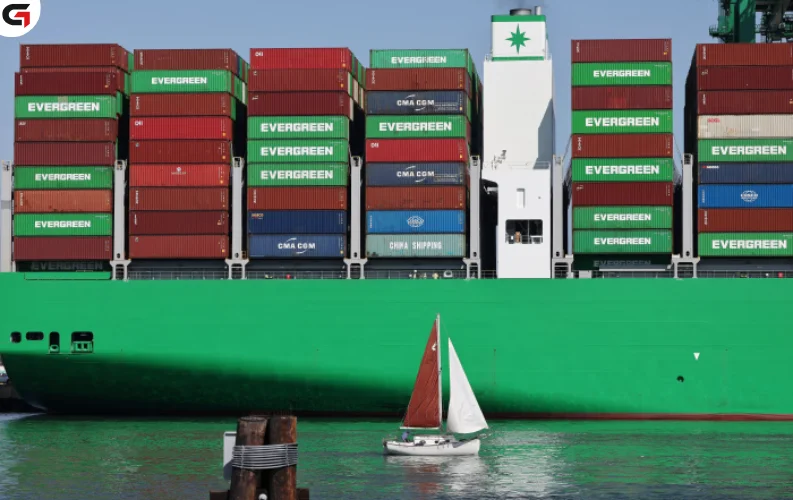
China’s exports posted a stronger-than-expected rebound in November as manufacturers accelerated shipments following a temporary easing of trade tensions with the United States. The surge marks a significant turnaround for the world’s second-largest economy after months of uneven factory activity and weakening global demand.
Outbound shipments rose 5.9% year-on-year in U.S. dollar terms, customs data showed Monday, far exceeding economists’ expectations for 3.8% growth and reversing October’s surprise 1.1% drop, the first contraction since early 2024.
Imports climbed 1.9%, falling short of the 3% increase forecast in a Reuters poll. Analysts said persistent weakness in the property market and rising concerns over job security continue to restrain household spending. Still, November’s import growth outpaced the 1% recorded in October.
Boost from U.S.–China trade truce
The export rebound follows a one-year truce reached in late October when President Xi Jinping and the U.S. President met in South Korea. The agreement temporarily paused a series of restrictive measures and included commitments to roll back certain tariffs, ease export controls on critical minerals and advanced technologies, and expand China’s purchases of American agricultural goods, including soybeans.
Under the temporary easing, U.S. levies on Chinese imports remain around 47.5%, while Beijing’s tariffs on U.S. goods hold near 32%, according to the Peterson Institute for International Economics.
Despite the easing, China’s manufacturing sector remains under strain. Both official and private surveys for November showed factory activity contracting again, with new orders, particularly export-focused ones, still weak.
Trade surplus widens further
From January to November, China’s exports rose 5.4% from a year earlier, while imports slipped 0.6%, widening the trade surplus to $1.076 trillion, an increase of 21.6% compared with the same period in 2024.
Officials have repeatedly pledged to bolster imports and address international criticism over China’s heavy export reliance and excess industrial capacity.
Eyes on Beijing’s next policy moves
Chinese leaders are expected to meet later this month for the Central Economic Work Conference, where they will set growth and fiscal priorities for 2026. Goldman Sachs expects authorities to maintain the growth target at “around 5%”, but achieving that pace will likely require fresh stimulus.
The bank forecasts additional fiscal support worth roughly 1% of GDP, a 20-basis-point cut in key policy rates, and further measures aimed at stabilizing the housing sector.
Meanwhile, the yuan has strengthened nearly 5% since April, trading at 7.0669 against the dollar on Monday. Analysts say the firmer currency has not yet deterred exporters, but a stronger yuan could help shift the economy toward consumption-led growth, a long-standing policy priority.
Weijian Shan, CEO of PAG, argued recently that China “urgently needs to curb its export dependence and pivot towards domestic consumption” for sustainable growth. A stronger yuan, he said, could lift consumption’s contribution to GDP back toward its 2023 level of 86%, from the current 53%.