
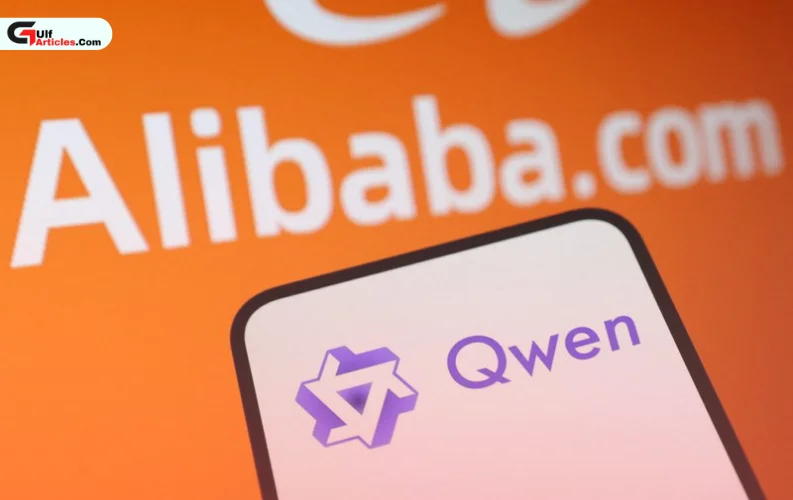
Hangzhou - Alibaba Group has introduced its latest artificial intelligence model series, Qwen3.5, marking a significant step in China’s intensifying competition to develop more autonomous AI systems capable of acting independently on behalf of users.
The release comes amid a surge of new model announcements from Chinese technology firms, reflecting a broader shift from traditional chatbots toward so-called “AI agents”, systems designed to perform multi-step tasks with minimal human oversight.
Open-Weight and Hosted Versions
Qwen3.5 has been launched in two formats: an open-weight model that developers can download and run on their own infrastructure, and a hosted version accessible through Alibaba Cloud’s Model Studio platform.
The open-weight version allows users to fine-tune and deploy the system independently, while the hosted model operates on Alibaba’s servers. Both versions became available on Monday, ahead of the Lunar New Year holiday.
Alibaba said Qwen3.5 introduces performance gains and improved cost efficiency compared with earlier iterations. The company also emphasized its “native multimodal capabilities,” enabling the model to process text, images and video within a unified system.
Focus on Agentic Capabilities
A central feature of Qwen3.5 is its support for agentic functions, allowing it to carry out tasks such as coding assistance and workflow automation. The model is designed to be compatible with open-source AI agents, including those developed by OpenClaw, which have recently gained traction among developers.
AI agents represent a growing area of focus within the industry. Unlike conventional chatbots that respond to prompts, agents can independently execute sequences of actions, making decisions and interacting with digital environments on a user’s behalf.
Interest in such systems accelerated after U.S.-based Anthropic introduced enhanced agent tools earlier this year, prompting broader industry investment in autonomous capabilities.
Intensifying Domestic Competition
Alibaba’s announcement follows upgraded model releases from domestic rivals ByteDance and Zhipu AI, both of which have also introduced features aimed at strengthening agent-based applications.
The Qwen3.5 open-weight model contains 397 billion parameters, the variables that influence how an AI model learns and processes information. Although this figure is lower than Alibaba’s previous flagship model, the company said internal benchmark testing indicates improved performance.
According to Alibaba, Qwen3.5’s results are comparable to leading Western models from OpenAI, Anthropic and Google DeepMind. However, those comparisons were based on the company’s own evaluations and have not been independently verified.
The hosted version, Qwen3.5-Plus, was also described as delivering competitive performance through Alibaba Cloud’s infrastructure.
Expanding Language Support
The new series supports 201 languages and dialects, a substantial increase from the previous generation’s 82, positioning the model for broader global deployment.
Lin Junyang, technical lead of Alibaba Cloud’s Qwen team, indicated in a social media post that additional open-weight releases may follow during the holiday period.
Global AI Race Tightens
The unveiling of Qwen3.5 highlights the accelerating AI rivalry between China and Western technology leaders. Industry executives have suggested that Chinese AI models are closing the performance gap with their U.S. counterparts, narrowing what was once seen as a significant technological lead.
As AI development shifts toward autonomous systems capable of executing complex digital tasks, competition is increasingly defined not only by conversational quality but by real-world application capabilities.
With Qwen3.5, Alibaba is signaling that China’s AI ecosystem intends to remain competitive as the industry moves into what many describe as the era of intelligent agents.