
Abu Dhabi’s economy recorded strong growth in the third quarter of 2025, expanding 7.7 percent year on year to reach a record Dh325.7 billion, according to data released by the Statistics Centre – Abu Dhabi.
The latest figures underline continued economic momentum driven primarily by non-oil sectors, reflecting the emirate’s ongoing diversification strategy.
Non-oil activities grew 7.6 percent during the quarter compared with the same period last year and accounted for 54 percent of total GDP, with a value of Dh175.6 billion. The data highlights the increasing contribution of non-oil industries to overall economic output.
Steady Growth Over Nine Months
For the first nine months of 2025, Abu Dhabi’s GDP expanded 5 percent year on year, while the non-oil economy grew at a faster pace of 6.8 percent, indicating balanced growth despite global economic uncertainty.
Ahmed Jasim Al Zaabi, Chairman of the Abu Dhabi Department of Economic Development, said the results demonstrate the resilience of Abu Dhabi’s economic framework, often referred to as the “Falcon Economy” model. He noted that the emirate has now recorded growth for 18 consecutive quarters, led by sustained expansion in non-oil sectors.
Meanwhile, Abdulla Gharib Alqemzi, Director-General of SCAD, said the figures reflect Abu Dhabi’s continued ability to attract long-term investment. He added that foreign investment reached Dh1,075.8 billion, supporting productive capacity, non-oil activity, and overall economic performance.
Sector-Wise Performance
Several key sectors posted strong year-on-year growth in the third quarter.
The construction sector expanded 13.9 percent, contributing Dh30.5 billion, or 9.4 percent of GDP, supported by ongoing infrastructure projects and increased private-sector participation.
The real estate sector grew 13.1 percent to Dh12.1 billion, reflecting sustained demand across residential and commercial developments.
In logistics, transport and storage activities rose 13.8 percent to Dh8.2 billion, driven by higher cargo volumes, port operations, and logistics expansion, including long-term lease agreements at Khalifa Port.
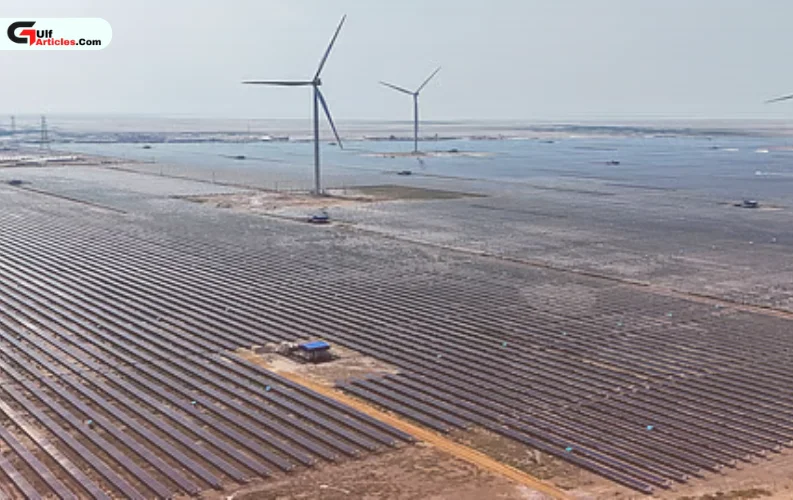
The electricity, gas, and water supply sector recorded the fastest growth, increasing 16.2 percent year on year to Dh6.2 billion, supported by continued investment in utilities and the first full year of operations at the Barakah Nuclear Energy Plant.
The manufacturing sector contributed Dh30.5 billion, accounting for 9.4 percent of GDP, and grew 2.4 percent year on year, continuing to play a central role in industrial expansion and supply chain integration.
SCAD said it will continue to provide timely and accurate economic data to support policy planning as Abu Dhabi advances its long-term economic diversification objectives.